NEWS &
PRESS RELEASES
JANNUARY, 2026
Christianna Diogenous: “Leadership begins with genuine respect for people.”
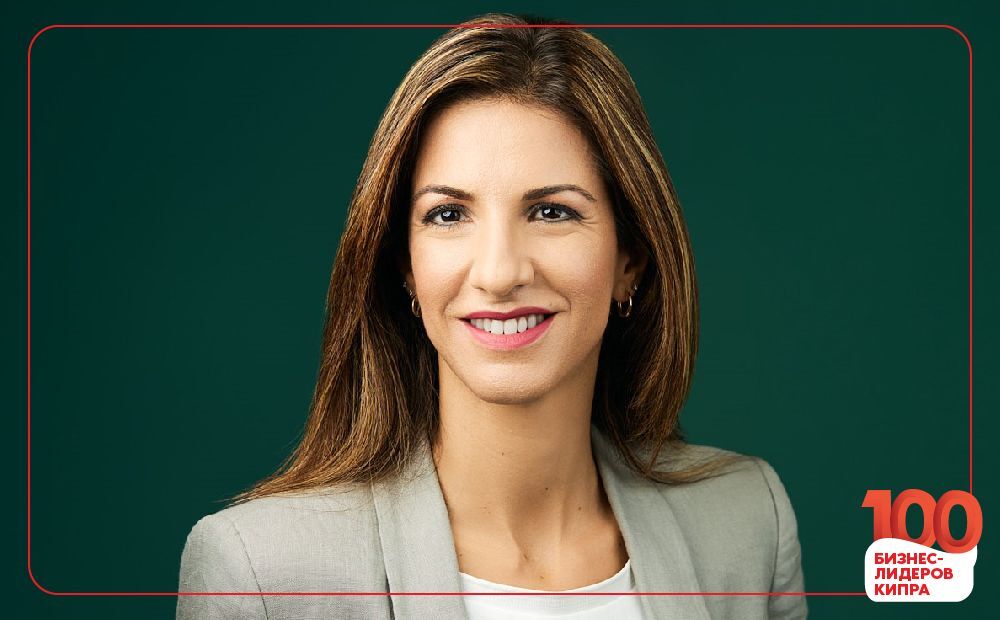
As the CEO of Unicars and a fourth-generation leader of one of Cyprus’ most established family groups, Christianna Diogenous navigates an evolving automotive landscape with a rare blend of instinct, structure and empathy. Her career spans consulting in London, a decade in FMCG and logistics, and a return to mobility during one of the industry’s most transformative periods. She leads with a strong sense of responsibility to her people and her legacy, yet with a distinctly modern, human approach. In this conversation, she reflects on leadership, culture, change and what it means to build something that lasts.
Your career spans consulting, FMCG distribution, logistics and once again, the automotive sector. Looking back, what inner compass guided your professional decisions through such different industries?
I have always relied on my instinct. It is something I trust deeply, and over the years it has guided most of my decisions. I usually sense quite clearly whether something is right for me, and then I validate that feeling by speaking to people around me whose judgement I value. But the final decision comes from within.
At the very beginning of my career, choosing to stay in London to work in consulting, rather than returning immediately to Cyprus, was about standing on my own professionally and gaining the experience of an international professional environment. That early independence shaped the confidence I carried back into the family business.
Eventually most of my career has been within our family group, thus another guiding force for my decisions has been the desire to honour and contribute to the legacy that began with my great grandfather and continued through my grandfather, my mother and my aunt. My brother and I grew up in that environment and were encouraged to understand the business at every level. So whenever I considered a move, the question was not simply what I preferred, but where my contribution would matter most.
This is why I agreed to move from Unicars to the FMCG business, even though I loved automotive. At the time, Consumer Goods felt less appealing and out of my comfort zone, but it was the right decision for the Group. Ironically, that experience became one of the most formative periods of my career, giving me a deep understanding of operations, change management and team dynamics. Years later, when I returned to Unicars, I was bringing back much more substance.
You stepped into the role of CEO at Unicars during a time when mobility, sustainability and customer expectations were shifting rapidly. What was the first change you felt compelled to make?
When I returned to Unicars, I felt that the company had lost part of its cultural identity. After the financial crisis, the organisation had naturally gone into defensive mode, but in doing so it had turned inward. Some of the unity and shared sense of purpose that had always characterised Unicars had become less visible over time.
The first priority was to rebuild that cultural foundation. Before we talked about technology or strategy, I wanted our people to reconnect with our values and with each other. I wanted to restore the feeling of one team with a common direction. That meant open conversations, clear alignment among the management team and a renewed focus on our people.
Then the pandemic arrived. Because we had already started modernising the culture and pushing towards digital transformation, the crisis accelerated our progress instead of stalling it. We launched the first online showroom in Cyprus, created digital customer journeys and kept people connected even when they were confined at home. The fact that customers continued to buy cars during lockdown strengthened our confidence internally. We realised that agility and alignment allow us to adapt quickly, even in extreme circumstances.
Many leaders speak about the moment they began to truly feel like a leader. Was there a turning point for you that shaped your understanding of responsibility and influence?
For me, leadership emerged gradually rather than through a single moment. It became clearer during the major restructuring of the FMCG business, which included mergers, a division into separate companies and significant operational change. I led those processes from start to finish.
What made me feel like a leader was not the complexity of the transactions, but the impact on people. When colleagues told me that the way the changes were handled made them feel respected, safe and valued, I understood the weight of responsibility a leader carries. People spend a huge part of their lives at work. If leaders do not acknowledge the human aspect of business decisions, then something fundamental is missing.
Our family group has survived through four generations because it has always prioritised people. That sense of responsibility deeply shaped my own approach to leadership.
Unicars represents some of the world’s most trusted automotive brands. How do you balance global standards with the cultural and market realities of Cyprus when making strategic decisions?
Balancing global direction with local relevance is one of the most interesting parts of the role. Global brands require consistency in values, positioning and visual identity. In the era of social media, it is important that a customer in Cyprus recognises the same Volkswagen or Audi they see elsewhere.
At the same time, Cyprus has its own geography, lifestyle and expectations. A purely global message often does not resonate. We look for creative ways to express brand values through a local perspective.
Your involvement in the Motor and Electric Vehicles Importers Association places you at the centre of Cyprus’ transition to sustainable mobility. What do you see as the next realistic steps for the island?
Cyprus is naturally suited to electric mobility. We have short distances, plenty of sunshine and none of the extreme climate challenges that complicate electrification elsewhere.
Infrastructure alone is not enough. Incentives matter a great deal. Government subsidy schemes helped move the market, but they are coming to an end.
And finally, after years of leading companies with deep roots in Cyprus, what legacy do you hope to leave in the country’s business landscape?
I hope people will feel that I added something meaningful to the legacy that I inherited.